1) If you're doing any "cutting in" along the rub rail, around hardware, etc. do this during the tipping process. If you do it in advance, the paint will be too dry and you'll get a ridge.
2) Inspite of what what I read and saw on videos, you need to put the paint on fairly wet to get the leveling effect. Just not so wet it runs.
3) The tipping brush needs to be fairly wet so that it glides along the paint. Just about wet enough to paint with, but you're using almost no pressure so the paint stays on the brush. (we used a foam brush since that's what was used by the Pettit rep in a video)
4) The tipping needs to be done immediately behind the roller. Cathy rolled and we found that tipping worked best when I was only a foot behind her as we worked our way around the boat.
5) Tip it once, then leave it alone. Trying to fix anything will just make it worse. The paint gets tacky faster than you realize.
6) We initially thought tipping was the more "skilled labor" between the two. In retrospect I think rolling is. Getting a nice, even, wet coat is the key. Let the tipping take care of ridges, bubbles, etc.
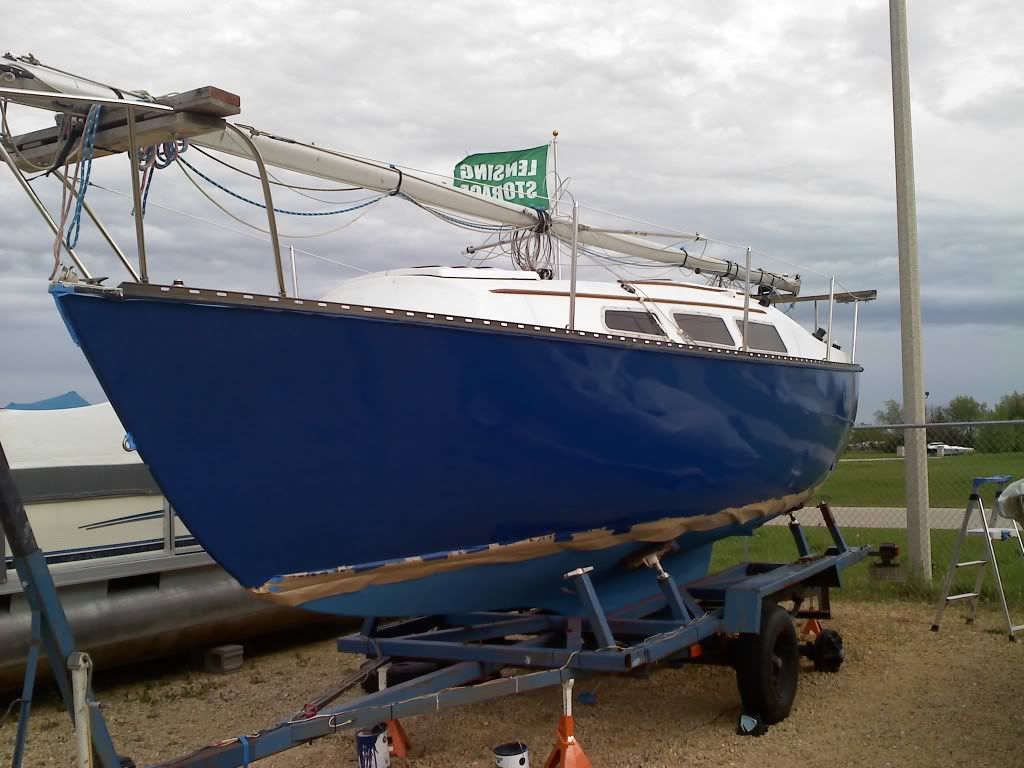
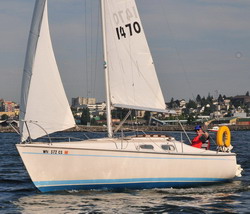
Here is a picture after our first coat.