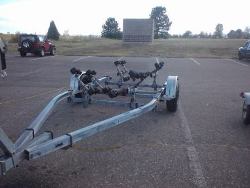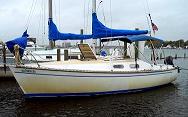
New to boats as a whole, and just bought a Chrysler 22. Honestly in excellent shape; great deal. Main was just way too old, will buy one at "sail warehouse" $475, unless you tell me otherwise. Jib is new. Mast - good. Hull - good, approaching bottom-paint time, but trailered; top decks in great shape (was kept out of sun for most of it's life: NO spider cracking, ever-so-slight crazing at scant "abuse" points). It tended to list to starboard when I put in, and it took a while to realize that the foam in the starboard cockpit seats was holding water. So here's the good news: I evacuated all of the foam in the seats, and the hull remains as hard as a tank. The plywood inbetween seat/ storage was glassed, with zero sign of rot. The plywood-?-floor-underlayment-decking (sub-liner)- also glassed, also zero rot. So if you are wondering about the hull going soft related to "foam problems".... very, very, very unlikely. Up towards the starboard bow seat/area, I'm removing that foam as well... it seems to go underneath the bow storage area though. If you have any information about the extent to which foam was used in these boats I would greatly appreciate any info. I think the seats are the only area where there was foam, and I want to know if it also goes lower than that, directly beneath the flooring sandwiched between inner-liner and hull. I'm thinking it doesn't, so far. Again, my hull was hard as a rock. For those who debate "foam removal", I will say this: in evacuating the foam, the water was mostly held "low"/ gravitationally, but also ANYWHERE the foam touched the fiberglass (much like capillary attraction). I realize now... that probably ANY product coming in contact/ layered next to ANY hull, will likely keep/ wick water, and just hold it there. The first three inches of foam where foam-touches-hull is where the water is held, the center mass was simply dry. If you don't mind work, it wasn't too bad to get rid of, it did carry a good amount of water (probably coming in from the toe-rail) and I think it will likely rid your boat of a resin-y type smell if you remove it... very pungent.
The inner-liner is a sandwich of fiberglass with a honey-comb cardboard core. The cardboard was stable, but suffering water damage: but only on the sitting/ horizontal surface of the seat (where water vapor could rise and permeate). Hull...again... really I'm vulgar impressive... thick hand layed matting and weave: you'll never see them built like this again. The transom (thank God) was made completely of glass. I consider the hull virtually indestructable - exceptions being impact damage, and .... hideous neglect. I appreciate the "round" construction of the top-decks, because I can hear lots of micro-flexing going on when I walk on it, and it tells me that it is built like the inner-liner (fiberglass-honeycomb cardboard-sandwich). The "roundness" will undoubtedly help structural integrity, where a flat top-deck would clearly breakdown in the same amount of time. Next thought centers around my Keel, and guessing it's just time to do it, too. NOTHING else could go wrong with my boat, short of that. I will probably make the metal templates myself... would be nice to know the thicknesses of metal, and the diameter of the rod.
Whew!
I talk too much.
I've heard you guys are incredibly supportive, and I can't wait to make some long-standing friendships here. Happy sailing when tha' weather breaks! Message Posted 01-27-2011.

Bill Williams
email: whwthor@yahoo.com




 Can't be helped, we are very social. But take your time if your nervous. We'll grow on you and then you'll hooked. It took me a couple months just to post the first time. Now they can't shut me up.







 Mine was high and dry in this location.
 So I always shut the motor down before going forward when I sail alone.
 That's my story and I'm sticking to it.