Wanted to ask opinions here. I have done a great deal of research on lightning protection over the years. I have listened to the " old timers" debate this for many years also. I have just finished up several good, unbiased, articles on just this topic. So I wanted to get some opinions, experiences and currently used equipment, to aid in the sharing of knowledge within our little community.
I was planning to publish what the " experts" say later in the week, but not before a good "chryslersailors" discussion.
So hit it boys!
"The pessimist complains about the wind; the optimist expects it to change; the realist adjusts the sails." - William Arthur Ward jerecaustin.com
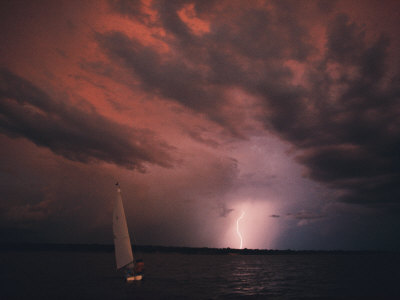
That's a great description. I would think that would work pretty well. There is something strange that happens when your on the water though. I'm no scientist, but when your far away from everything it is all but inevitable that it will find you. I've watched many strikes just hit in open water, which just seems wierd. The schools of though are divided for sure.
QuickTip: if you find yourself in a boat, larger than most of ours, and you are assured that the gimbal stove is grounded, you can put all of your portable electronic devices inside the stove and they will be protected in a lighting strike.
"The pessimist complains about the wind; the optimist expects it to change; the realist adjusts the sails." - William Arthur Ward jerecaustin.com
EE has grounding wire from the chainplates to a metal plate under the hull, but they wander from the chainplates down under the banquettes, make a 90 degree turn and run under the banquettes to a point under the stern berth, then make a 90 bend to go to the plate just behind the keel...I really doubt a good blast of high voltage is going to politely follow all the those twists and turns, lol..
Ha, but I'll bet it looks very nice. My absolute favorite lp rig ever was on my good friends Catalina 25. A pair of jumper cables, one on inner stay, one on outer. The other end overboard, works fine at anchor I suppose. Lol
"The pessimist complains about the wind; the optimist expects it to change; the realist adjusts the sails." - William Arthur Ward jerecaustin.com
Practical Sailor had a brief discussion on line this week. Their thought is that most boat are made so that the mast contacts the step (duh, I know), which is also metal. This step sets on a compression post, also metal, which is then grounded to the metal keel. I'm not sure our boats are built this way. Some of you have had the mast step apart and it appears that the metal step does not contact the compression post. Input?
As for how lightning rods work, (this was going to be in my question of the week) do they
a) probide a easy path so that lightning can get to ground quickly, causing as little damage as possible
b) suck electrons out of the sky so that lightning does not occur in the first place
c) allow protons from the ground to travel to the atmosphere and thereby neutralize it
d) they're magic and only work if a chicken has been sacrificed on the Webber grill
Last edited by Paul on Tue Jul 12, 2011 5:27 pm, edited 1 time in total.
Spent a couple summers working at a ski area north of Tucson and had lots of big boomers roll in for the monsoons there. Lightning is not something we like to be on the water with if at all possible. Got caught out once and we hugged the shorline while strikes hit the mountains above us...
I still can't decide either way which is best, but will probably put something in the project boat to ground it. Figure giving it something to travel down is better than not and having it find it's own path if we do get struck.